
Best Indicators for Forex Trading Maximize Your Success
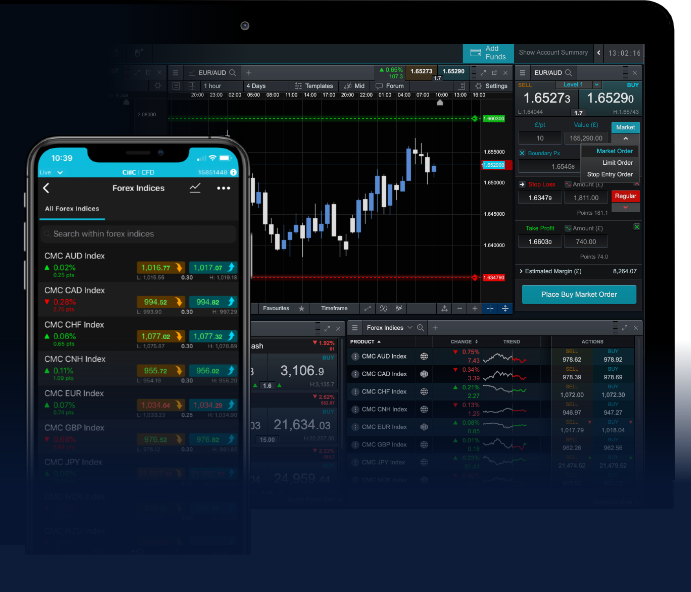
In the fast-paced world of Forex trading, having the right tools at your disposal can significantly influence your success. Utilizing reliable indicators can help traders make informed decisions and improve their chances of profitability. In this article, we will explore some of the best indicators for Forex trading that every trader should consider integrating into their strategy. Whether you are a novice or an experienced trader, understanding these indicators can aid you in navigating the Forex market more effectively. For expert guidance and resources, visit best indicators for forex trading Trading Platform VN to enhance your trading experience.
1. Moving Averages
Moving Averages (MA) are one of the most common and essential indicators in Forex trading. They smooth out price action and help identify trends over a specific period. The two main types of moving averages are the Simple Moving Average (SMA) and the Exponential Moving Average (EMA).
– **SMA** is calculated by taking the average price over a certain number of periods. It’s slower to react to price changes but provides a clearer long-term view.
– **EMA** gives more weight to recent prices, making it more responsive to price movements. Thus, traders often use EMA to identify potential trend reversals more quickly.
2. Relative Strength Index (RSI)
The Relative Strength Index (RSI) is a momentum oscillator that measures the speed and change of price movements. RSI values range from 0 to 100, and it is typically used to identify overbought or oversold conditions in a market.
– A value above 70 indicates that an asset may be overbought, suggesting a pullback or correction might occur soon.
– Conversely, an RSI below 30 indicates oversold conditions, suggesting a potential upward correction. Traders often look for divergence between RSI and price action as a signal for possible trend reversals.
3. Moving Average Convergence Divergence (MACD)
The MACD is a popular trend-following momentum indicator that shows the relationship between two moving averages of a security’s price. The MACD line is calculated by subtracting the 26-period EMA from the 12-period EMA.
The result is then plotted against a signal line, which is a 9-period EMA of the MACD line. Traders use the MACD to identify potential buy or sell signals:
– When the MACD line crosses above the signal line, it may indicate a buy signal.
– Conversely, when the MACD line crosses below the signal line, it may suggest a sell signal.
4. Bollinger Bands

Bollinger Bands are a volatility indicator that consists of a middle band (SMA) and two outer bands (standard deviations away from the SMA). This indicator is widely used to determine overbought and oversold conditions while also measuring market volatility.
– When the bands expand, it indicates increased market volatility, while contraction of the bands suggests a decrease in volatility.
Traders often use the outer bands as potential target areas for price reversals or breakouts. When prices hit the upper band, it signifies overbought conditions, whereas hitting the lower band signals oversold conditions.
5. Stochastic Oscillator
The Stochastic Oscillator is another momentum indicator that compares a particular closing price of an asset to a range of its prices over a specific period. The Stochastic values range from 0 to 100 and typically generate buy and sell signals based on its position relative to certain threshold levels.
– A value above 80 indicates overbought conditions, while below 20 indicates oversold conditions. The key aspect of the Stochastic Oscillator is identifying divergence with price movements to anticipate reversals.
6. Fibonacci Retracement Levels
Fibonacci retracement levels are a series of horizontal lines that indicate potential support and resistance levels based on the Fibonacci sequence. Traders use these levels to predict potential reversal points and market corrections.
Key Fibonacci levels include 23.6%, 38.2%, 50%, 61.8%, and 100%. When prices retrace to these levels after a strong move, they often find support or resistance, making them an essential tool for trade planning.
7. Average True Range (ATR)
The Average True Range (ATR) is a measure of market volatility. It provides insight into how much price moves, on average, during a given time period. Traders utilize ATR for setting stop-loss levels and managing position sizes effectively.
Higher ATR values indicate higher volatility, which can lead to larger price movements, making it essential for risk management. ATR is typically used in conjunction with other indicators to confirm trade signals.
Conclusion
Utilizing the right indicators is crucial for success in Forex trading. Each of the indicators discussed—Moving Averages, RSI, MACD, Bollinger Bands, Stochastic Oscillator, Fibonacci Retracement Levels, and ATR—offers unique insights into market movements and can enhance your trading strategy.
Incorporating a combination of these indicators can help traders make more informed decisions and adapt to changing market conditions. Regardless of your experience level, mastering these tools will position you for better performance and greater profitability in the Forex market.